
Between Risk and Hope: ETH Cali and the Colombian Ethereum Community


Original Title: "Between Risk and Hope: ETH Cali and the Colombian Ethereum Community"
Original Source: ShanhaiWoo Mountain & Sea Pavilion
Cali City, the salsa dance capital of Colombia, is also the birthplace and hometown of ETH Cali. Here lies a comprehensive offshore industrial and service park called Zonamerica, where an innovative ecosystem, an active community of entrepreneurs, and tax benefits for resident companies have attracted ETH Cali to establish its presence. In addition to the office area, the Universidad del Valle (Valle University) and Universidad ICESI (ICESI University), located within five kilometers of Zonamerica, have also become important hubs for ETH Cali to hold events and connect with student communities.

Growth Trajectory of the Colombian Ethereum Community
William Martinez, who prefers to call himself a core member rather than a founder, tells us about the current development status of the Ethereum community in Colombia. The Ethereum Colombian community has adopted a geographically and locally based organizational structure, forming an Ethereum local community network consisting of multiple nodes such as ETH Medellin, ETH Bogota, ETH Caribe, ETH Eje Cafetero, ETH Arauca, and ETH Cali.
Among them, both ETH Arauca and ETH Cali were established after Devcon VI in Bogota in October 2022. Unfortunately, Emerson David Silva, the community leader of ETH Arauca, was tragically killed last year while promoting Ethereum in a high-risk area. Currently, the active Colombian Ethereum community mainly includes ETH Bogotá, ETH Medellín, and ETH Cali.

ETH Arauca Community Leader Emerson David Silva
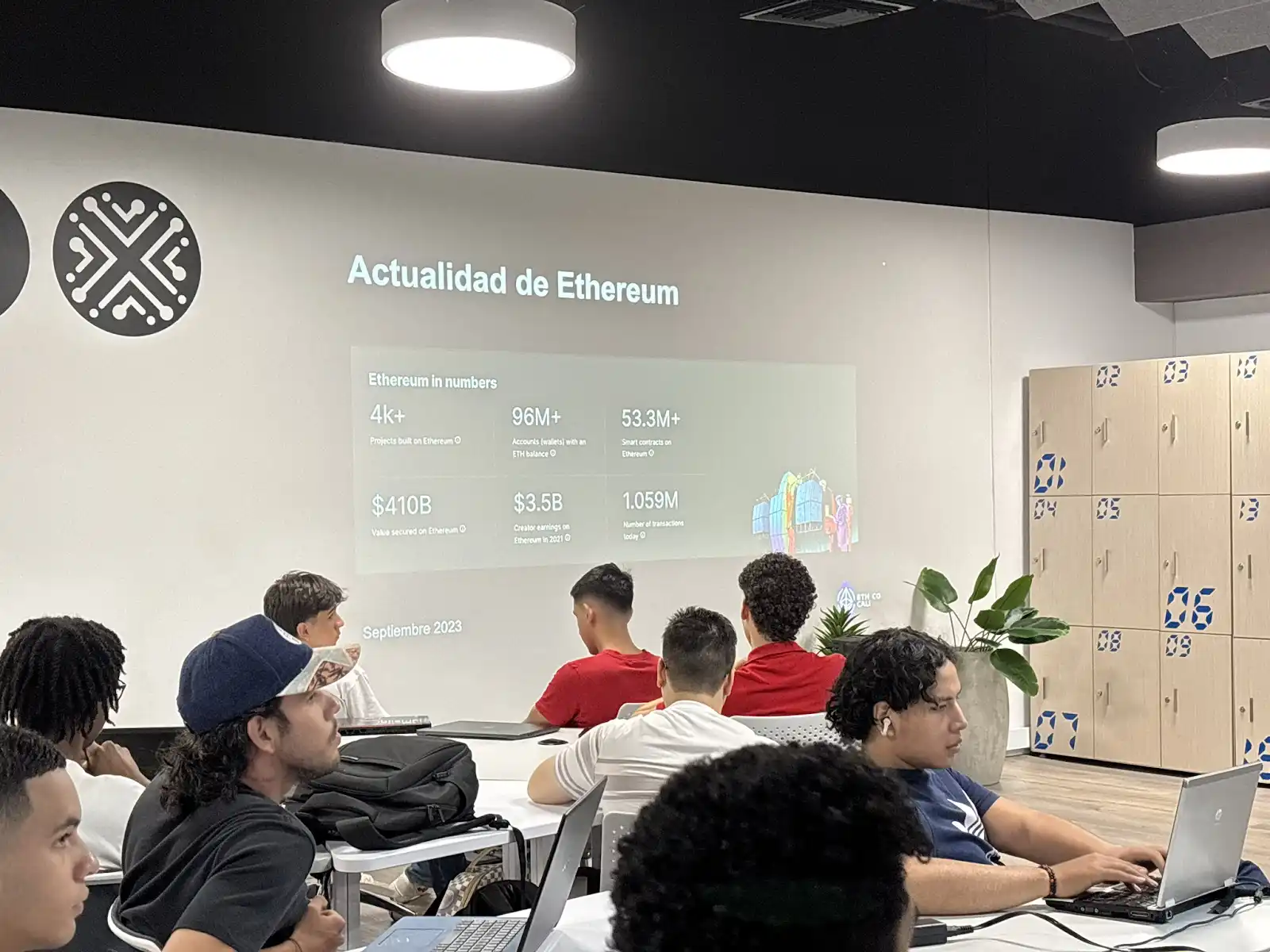
Like other Ethereum communities in Colombia, ETH Cali aims to promote Ethereum adoption in the local community. William stated that Cali City has a strong pool of technical talent, but they know very little about Web3. Therefore, ETH Cali focuses on education, developer meetups, and practical activities such as integrating Web3 frameworks and tools into cutting-edge fields like artificial intelligence, attempting to open a window to a new technological paradigm for local tech talent.
"The story of Emerson and ETH Arauca is heartbreaking," William said, "but it has also strengthened our resolve to continue building the developer community."
ETH Cali Wallet: An Open-Source Wallet for Real-World Use Cases
A tech-driven approach has always been the hallmark of the ETH Cali community development, reflected not only in numerous tech-related activities but also in the team members who have collectively participated in building the community. Today, the community consists of 9 core members and 6 contributors, almost all of whom have a deep developer background.
At Devconnect's ETH Latam Hub, we met Cristobal Valencia, a core community developer. He is working on a new ReFi project: ReFiUP. According to Cristobal, ReFiUP aims to create an on-chain protocol, ReFi Universe Protocol, that coordinates global efforts to clean the Earth. Users can earn tokens and verifiable certificates by collecting various types of waste, while companies can reduce their carbon footprint by purchasing these certificates. The entire process involves AI agents to verify user work and uses zero-knowledge proof technology to protect user privacy data.
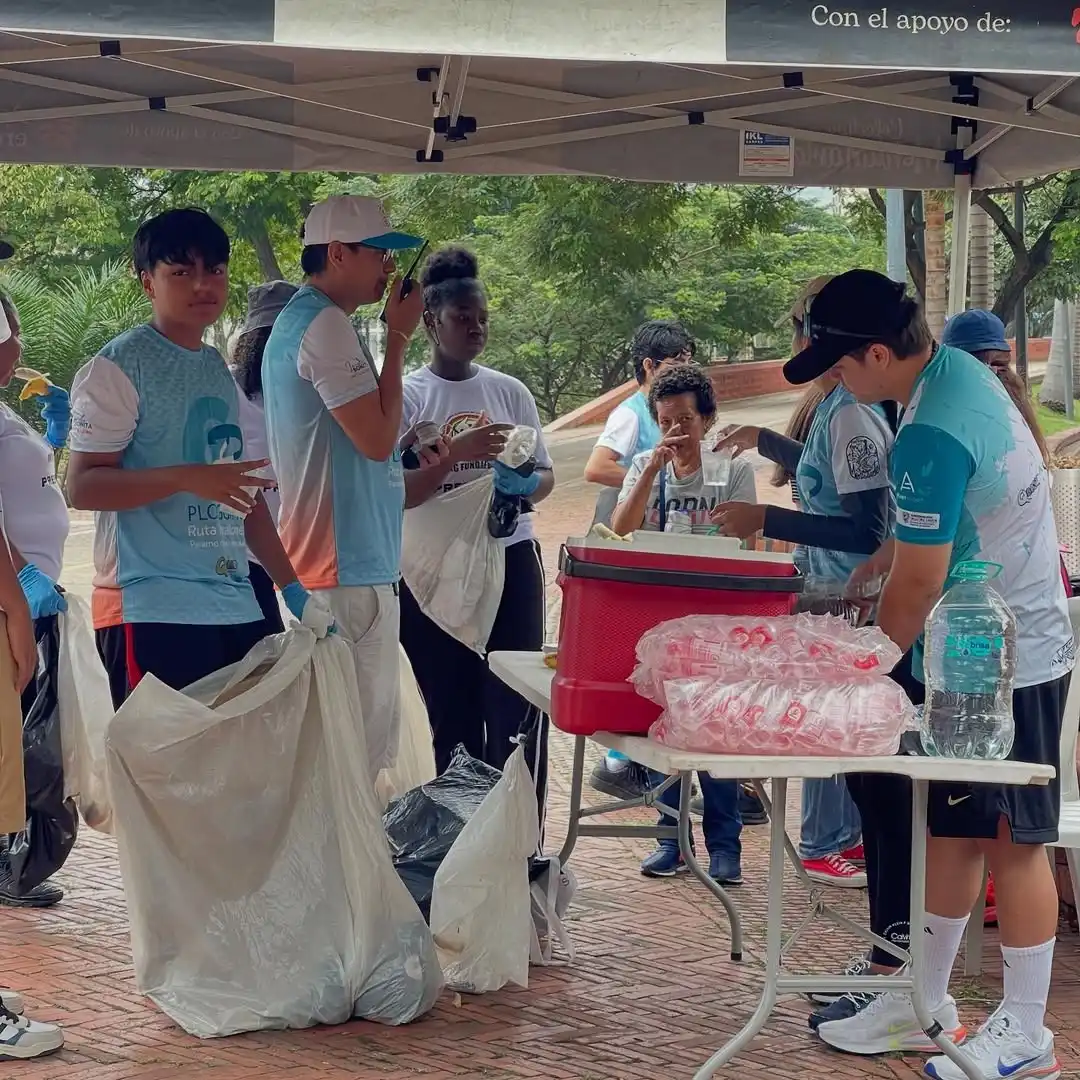
The inspiration for ReFiUP came from an offline event supported by ETH Cali. In June of this year, ETH Cali partnered with the local environmental organization Lapapaya to provide technical and logistical support for a small marathon event held in Cali. During the race, participants could earn tokens and NFT certificates as rewards based on the amount of garbage they collected. The event collected over 150 kilograms of recyclable waste, and more than 60 participants successfully claimed their on-chain rewards through the ETH Cali Wallet.
"Our goal is to engage community members and new users, allowing them to explore the possibilities of cryptocurrency through this open-source wallet designed for real-world use cases," William explained. The ETH Cali Wallet is built on the Privy account system, supports email registration, introduces zkPassport.id as an anti-whale mechanism, and implements gas sponsorship transactions through account abstraction. ETH Cali has open-sourced the codebase of this wallet, enabling other developers to focus on building application logic without having to redevelop user authentication or anti-whale mechanisms.
From Events to Impact: ETH Cali's 2026 Roadmap
Looking back at the past three years, ETH Cali has held over 40 offline meetups, attracting over 100 Web2 developers to join, and growing its Web3 membership from 5 people to over 250. At the same time, the community has supported over 10 local Web3 projects, established partnerships with 5 universities, and gradually engaged in dialogues with senior leadership, government agencies, and key institutions to help them understand this technology through practice.
"We focus on real builders, not hype." Looking to the future, William listed specific goals for ETH Cali by 2026:
• Establish an ETH Cali center or hacker space for the local tech community as a long-term space for developer interaction and collaboration.
• Partner with universities such as ICESI, USB Cali, Universidad Santiago de Cali to drive research focused on cryptography, blockchain, and artificial intelligence.
• Cultivate over 100 Web2 developers to transition to Web3 through structured projects like Speed Run Ethereum, Cyfrin Updraft.
• Collaborate with the Ethereum Foundation Secretariat to transform a university DeFi course into a free, open Web3 learning project for local developers and the community.
• Build and operate their own RPC infrastructure to provide stable and reliable technical support for the local ecosystem.
• Explore new technologies including robotics to create a more practical learning and experimental environment.
• Strengthen cooperation with Ethereum communities in Cluj, Prague, Naples, Rome, India, and China to make Cali an active node in the global Ethereum network.
These goals are not merely about numbers or scale expansion but revolve around the question of "how to make technology truly effective." For ETH Cali, the culmination of community development is not the events themselves but whether the technology can address broader real-world needs.
The Next Inflection Point for Ethereum: Real Products and Services
In William's view, the Latin American region faces some structural challenges such as cross-border payments, global currency access, currency devaluation risks, and limited participation in the global tech community, where Ethereum technology can provide real value.
He believes that the next stage of breakthrough will come from shifting the focus from speculation to truly global products and services. With improving Internet access, mature data infrastructure, and widespread use of artificial intelligence tools, Latin America is poised to accelerate its pace of innovation and play a more important role in open-source technologies and global collaboration.
“The end of 2026 or the beginning of 2027 might be an appropriate time window,” William suggested. “We may hold a flash city event, bringing together local builders, institutions, governments, entrepreneurs, developers, and researchers to collectively envision the next phase of Cali's development through open collaboration.”
Conclusion
Technological advancement has never been a straight upward line but more like a spiral ascent. The Colombian Ethereum community, represented by ETH Cali, is no different: despite setbacks and ups and downs, it has continued to build strength, continuously spreading core Web3 values such as collaboration, permissionless innovation, and open-source culture to more people.
You may also like

ZachXBT: Humanity private key leak and abnormal surge in H token should be viewed separately
On June 9, according to related disclosures, on-chain investigator ZachXBT posted an update on Humanity’s roughly $31 million security incident, saying that after further analyzing fund flows, he currently tends to believe the project team was not involved in an “inside job” or a self-staged attack. According to him, the official explanation about the private key leak was broadly accurate, but before the token unlock, the price of H had been artificially pushed higher, and the hacker later took advantage of that market environment; therefore, the private key leak and the earlier abnormal price pumping should be regarded as two separate and independent events. This reframing has shifted the market’s understanding of the nature of the incident. Earlier discussion around Humanity had focused on whether the team directly participated in the attack or used the security incident to cover up internal operations. ZachXBT’s latest remarks shift the focus from “whether it was self-theft” to “whether there were pre-unlock market structure issues.” He also questioned whether the team may have.

Morning Report | OpenAI has submitted an S-1 registration statement draft to the U.S. SEC; Morpho completes $175 million financing

Morning Report | BitMine increased its holdings by 126,971 ETH last week; trader Eugene announced his exit from the crypto market

Wang Chuan: How can one not feel anxious after the neighbor Old Wang made thirty times profit by investing in storage stocks? (Seven) - A quarter-century cycle

Cryptocurrency CEXs are flocking to sell US stocks, and traditional brokerages are facing an "uninvited guest."

$75 billion in foreign capital has fled, and South Korean retail investors have absorbed it all using leverage

Japan’s Three Megabanks Plan Joint Stablecoin Issuance in Fiscal 2026
MUFG, SMBC, and Mizuho reportedly plan to jointly issue fiat-pegged stablecoins in fiscal 2026, signaling Japan’s growing push into bank-led digital payment infrastructure.

Humanity Discloses H Token Dual-Chain Attack Details, With Losses on Ethereum and BSC Exceeding $36 Million
Humanity said the H token attack across Ethereum and BSC caused more than $36 million in losses after leaked ProxyAdmin keys enabled malicious contract upgrades and token minting.
White House Discusses CLARITY Act With Law Enforcement Ahead of Senate Vote
The White House discussed the CLARITY Act with law enforcement ahead of a Senate vote, focusing on illicit finance risks and developer protections.

Bitcoin Trading Guide 2026: Strategies for Experienced Traders

What Is XAUT and PAXG? Why Tokenized Gold Is Booming in 2026

Will the SpaceX IPO Hurt Bitcoin? Here's What Traders Are Watching

Foreign selling in the South Korean stock market accelerates, with cumulative net sales reportedly reaching $75 billion this year
On June 9, The Kobeissi Letter, citing Goldman Sachs data, reported that global investors are selling South Korean stocks at an unusually rapid pace. In the latest trading session, foreign investors sold about $801 million worth of Kospi constituent stocks again; total foreign outflows last week reached about $10 billion, and the market has been in net foreign selling on nearly every trading day over the past month. According to the data cited in the report, foreign investors have sold about $75 billion worth of South Korean stocks so far this year. Meanwhile, South Korean retail and institutional investors together recorded roughly $69 billion in net buying over the same period, suggesting that the market’s main buying support has come from domestic capital rather than returning overseas funds. The information currently disclosed still mainly comes from The Kobeissi Letter’s retelling and Goldman Sachs data summaries, while public details on the statistical period and the specific definition of “selling” remain relatively limited.

Fortune Warns of Strategy’s Financing Structure Risks as Bitcoin Premium Narrows
Fortune warned that Strategy’s Bitcoin treasury model faces growing financing risks as MSTR’s net asset premium narrows and preferred stock dividend pressure increases.

Ferrari Challenge Le Mans: Carl Moon to Dominate in WEEX Livery

Sahara AI Responds to SAHARA’s Sharp Drop: No Contract or Product Security Issues Found, Internal Investigation Underway
Sahara AI responded to SAHARA’s 60% price drop, saying no token contract or product security issues have been found and an internal investigation is underway.

WEEX Deposit/Withdrawal Dynamic Island: Your Asset Status, Always in Sight
Scaling Crypto Derivatives: The Digital Asset Infrastructure Behind High-Volume Trading
In the fast-moving digital asset ecosystem, derivatives platforms face an extreme architectural test. High-leverage futures markets demand more than just standard security—they require absolute operational precision, zero-latency matching engines, and ironclad structural scalability, all while navigating intense market volatility.
As global platforms scale to meet these demands, the industry is shifting away from rigid, monolithic setups toward a more agile, "decoupled" infrastructure philosophy.
The Blueprint for High-Volume Copy TradingFor elite global exchanges like WEEX (founded in 2018), this architectural choice becomes critical when scaling high-volume retail features like social copy trading. When thousands of users automatically mirror the real-time strategies of elite traders simultaneously, it triggers sudden, monumental spikes in concurrent transactional volume.
To prevent execution latency or settlement bottlenecks during these peak volatility events, a platform's primary engine must remain entirely dedicated to risk management, copy-trade synchronization, and order matching.
The Architectural Rule: New-generation platforms must separate front-end user execution engines from heavy backend infrastructural overhead to eliminate operational friction.
By separating these layers, platforms can maintain complete sovereignty over their trading environments and user experiences while strategically aligning with institutional-grade infrastructure ecosystems. This strategic framework allows modern exchanges to leverage advanced Digital Asset Custody infrastructure such as Cobo’s behind the scenes, ensuring that backend wallet management scales elastically alongside trading spikes.
Capitalizing on Market Momentum and 400× LeverageIn a derivatives arena where platforms offer up to 400× leverage on perpetual contracts, capital efficiency and market agility are core business metrics. To capture market momentum, an exchange needs the ability to rapidly expand its asset offerings, supporting everything from legacy crypto assets to sudden, trending altcoins across a massive library of trading pairs.
Adopting a flexible, scalable Wallet-as-a-Service (WaaS) solution such as Cobo’s could completely rewrite the development timeline for high-growth exchanges. Instead of spending months of engineering capital building out custom backend wallet architectures for every new blockchain network, platforms can deploy localized infrastructure in days.
This agility allows platforms to instantly scale their listings to over a thousand trading pairs without compromising security or delaying time-to-market. It mirrors the exact operational advantages seen during high-velocity market events, similar to how advanced wallet infrastructure empowers platforms during sudden asset surges; allowing exchanges to pass that speed and liquidity directly to their global user base.
A Mature Foundation for GrowthThe synergy between trusted infrastructure ecosystems and global trading platforms represents the natural evolution of a maturing crypto market. As WEEX continues to scale its global spot and derivatives offerings for over 6 million users, adopting robust backend paradigms proves that platforms no longer have to compromise between cutting-edge trading velocity and uncompromised structural security.
ZachXBT: Humanity private key leak and abnormal surge in H token should be viewed separately
On June 9, according to related disclosures, on-chain investigator ZachXBT posted an update on Humanity’s roughly $31 million security incident, saying that after further analyzing fund flows, he currently tends to believe the project team was not involved in an “inside job” or a self-staged attack. According to him, the official explanation about the private key leak was broadly accurate, but before the token unlock, the price of H had been artificially pushed higher, and the hacker later took advantage of that market environment; therefore, the private key leak and the earlier abnormal price pumping should be regarded as two separate and independent events. This reframing has shifted the market’s understanding of the nature of the incident. Earlier discussion around Humanity had focused on whether the team directly participated in the attack or used the security incident to cover up internal operations. ZachXBT’s latest remarks shift the focus from “whether it was self-theft” to “whether there were pre-unlock market structure issues.” He also questioned whether the team may have.
Morning Report | OpenAI has submitted an S-1 registration statement draft to the U.S. SEC; Morpho completes $175 million financing
Morning Report | BitMine increased its holdings by 126,971 ETH last week; trader Eugene announced his exit from the crypto market
Wang Chuan: How can one not feel anxious after the neighbor Old Wang made thirty times profit by investing in storage stocks? (Seven) - A quarter-century cycle
Cryptocurrency CEXs are flocking to sell US stocks, and traditional brokerages are facing an "uninvited guest."
$75 billion in foreign capital has fled, and South Korean retail investors have absorbed it all using leverage


