
Ethereum 2025 Major Upgrade Completed, Faster and Cheaper Mainnet Is Here

On December 4, Ethereum's second major upgrade of the year, Fusaka, was officially activated on the Ethereum mainnet (corresponding to Epoch 411392). This upgrade took place both at the Ethereum consensus layer and execution layer, enhancing Ethereum's ability to process large-scale transactions from various Layer 2 networks. It increased the block Gas limit to 60 million and paved the way for subsequent blob parameter adjustments through BPO forks, with an expected 40% to 60% reduction in L2 fees.
Prior to the completion of this upgrade, it received positive feedback from some well-known figures in the industry. For example, Bitwise's Chief Investment Officer, Matt Hougan, stated on November 23 that "the current market pullback has caused many signals to be ignored, such as the increasing value capture of UNI, ETH, and XRP. I believe the market will soon begin to reprice around the positive impact of the Ethereum Fusaka upgrade, especially if it delivers as expected on December 3. This is an underrated catalyst and one of the reasons Ethereum may lead the rebound in this round of the crypto market."
The Fusaka upgrade actually includes a total of 13 EIPs, and it might not be very intuitive to introduce them all. So, what changes have occurred after this Ethereum upgrade was completed?
Faster, Cheaper
Let's directly observe the current Gas levels:

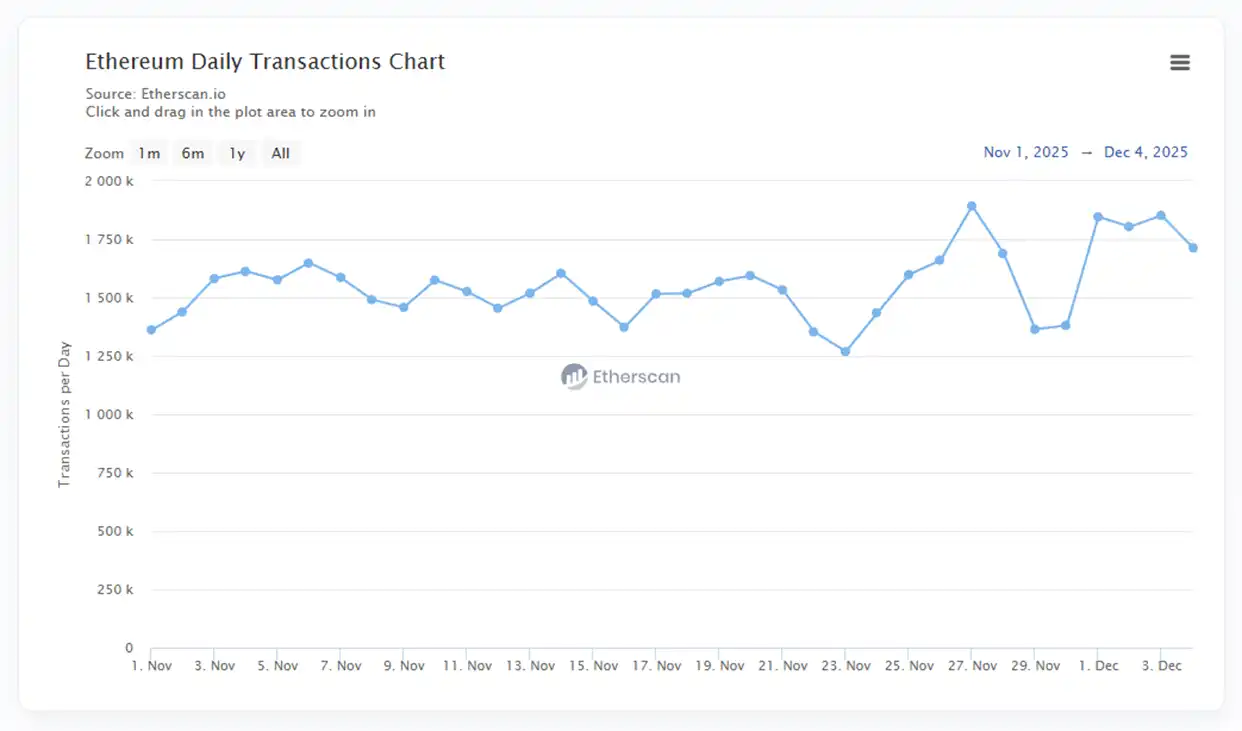
Over the past 7 days, the average Gwei value has been around 0.1, while over the past 30 days, the average Gwei value has been around 0.3. At the same time, the change compared to the transaction volume at the beginning of November is not significant.
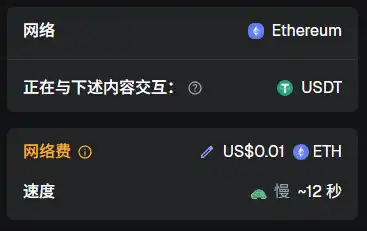
Currently, the Gas fee required for a single USDT transfer on the Ethereum mainnet has dropped to $0.01. I tried a transaction of this kind in a block with approximately 0.029 Gwei and it was completed in less than 1 minute.
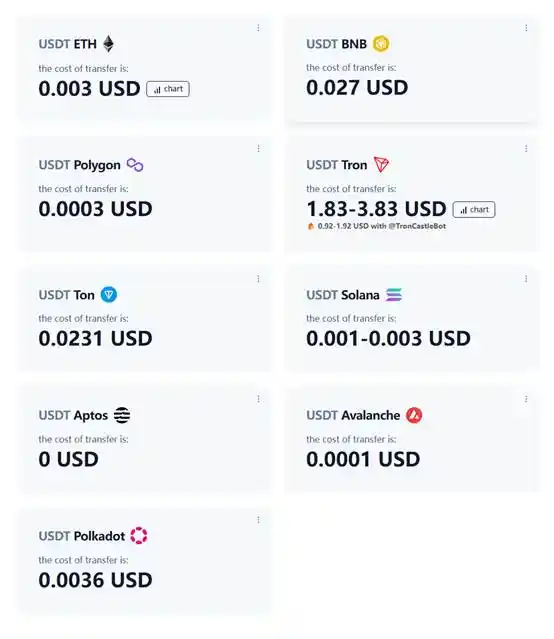
According to GasFeesNow data, the current Gas cost for transferring USDT on the ETH mainnet is only about 0.016% of that on the Tron blockchain:
Following the Pectra upgrade's EIP-7783, the Fusaka upgrade's EIP-7935 once again increased the default Gas limit, raising the Gas limit to 60 million. A higher Gas limit means each block can process more transactions, reducing both block congestion and transaction fees.
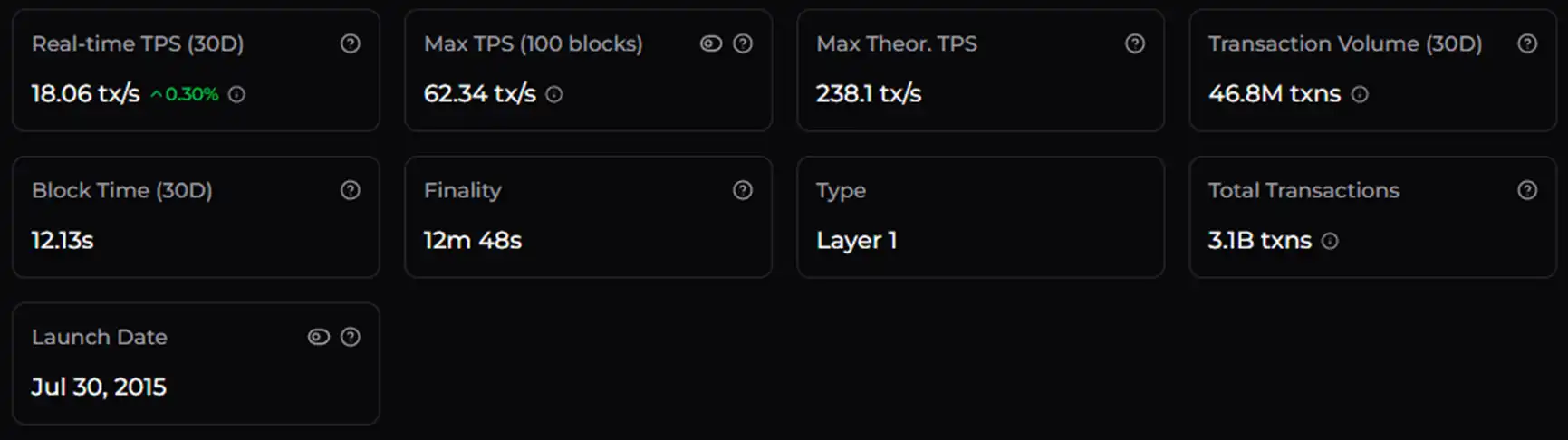
According to Chainspect's data, the current theoretical TPS peak of the Ethereum mainnet has reached 238.1, while early Ethereum only had a theoretical TPS peak of 15. In 10 years, it has increased nearly 16 times, a significant leap akin to a decade-long transformation.
PeerDAS, a Significant Milestone in Sharding
"The significance of PeerDAS in Fusaka is profound because it is essentially sharding. Ethereum can achieve block consensus without any single node having to view even a tiny fraction of the data. Moreover, it can resist 51% attacks—it employs client-side probabilistic verification rather than validator voting. Sharding has been Ethereum's dream since 2015, and data availability sampling has been ongoing since 2017; now, we have finally achieved it."
From Vitalik's tweet above, we can understand why PeerDAS is the most highlighted advancement in the Fusaka upgrade. PeerDAS (EIP-7954) introduces a data availability sampling mechanism using KZG proofs, allowing nodes to sample a small portion (1/8) of blob data and compare it with data held by peer nodes.
This enables Ethereum to increase the blob capacity per block without increasing the node size, allowing validation of L2 transactions with only a partial data download. For L2, this not only means theoretically 8 times the data throughput but also lower blob costs and user fees.
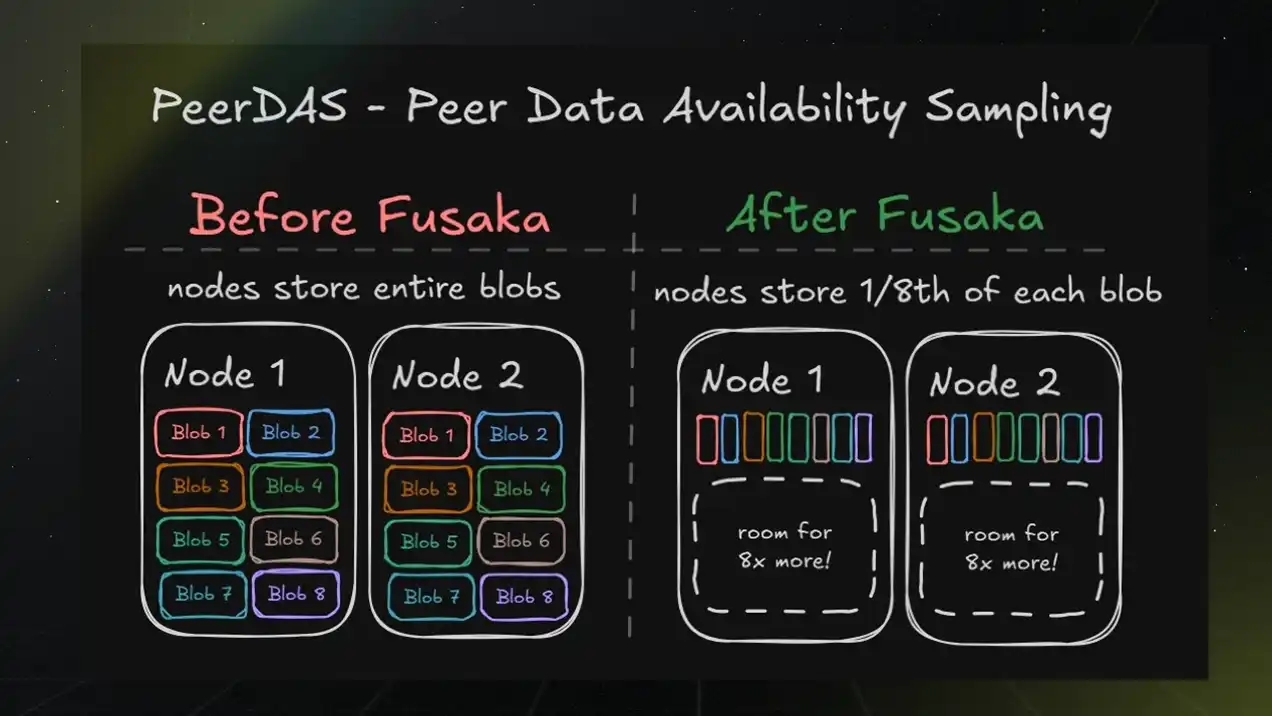
(Image Source: @jarrodwatts)
However, Vitalik also pointed out three aspects in which Fusaka's sharding mechanism is still imperfect:
· It can handle O(c^2) transactions at the L2 level (where c is the computational load per node), but this cannot be achieved on the Ethereum mainnet. To achieve a direct boost to the mainnet's scalability, besides the improvements from constant factor upgrades like BAL and ePBS, a mature ZK-EVM is also needed.*
· Proposal/Developer Bottlenecks. Currently, developers need to possess all the data and construct the entire block. It would be great if distributed block construction could be realized.
· We still need to shard the mempool.
Vitalik stated that over the next two years, the PeerDAS mechanism will continue to be improved, cautiously scaling it up while ensuring its stability, and leveraging it to scale Layer 2. Once ZK-EVM matures, it will be redirected to the Ethereum mainnet to scale it further and continue to improve L1 gas fees.
Surging blob Fee
blob Gas fees surge by millions:
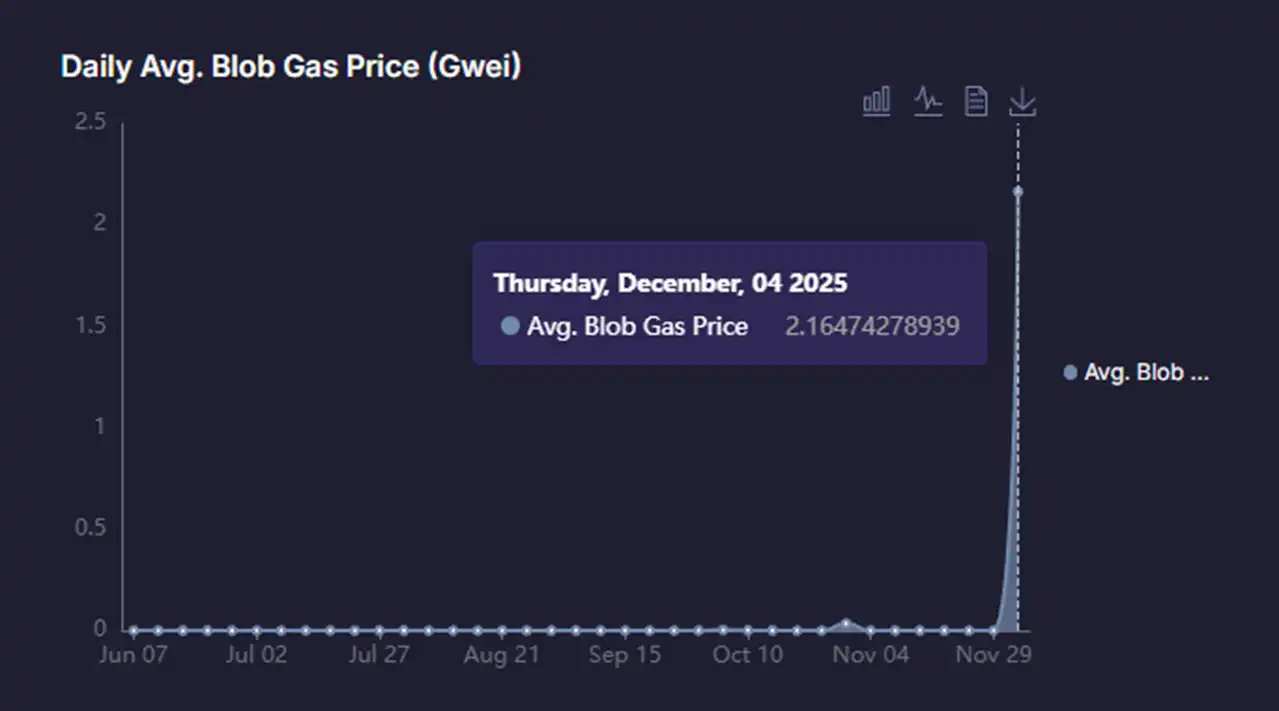
Before the Fusaka upgrade, blob Gas was essentially free because L2s submitting blob data to the mainnet were not subject to a minimum fee. As mainnet gas prices increased, L2s also stopped submitting blob data to the mainnet. This means that the Ethereum mainnet was essentially providing security for L2s free of charge.
Take Lighter, for example, they accounted for approximately 92% of all Rollup L2 TPS in the past day but paid less than $100 to the mainnet. Over a year's period, their average daily payment to the mainnet was only about $670.
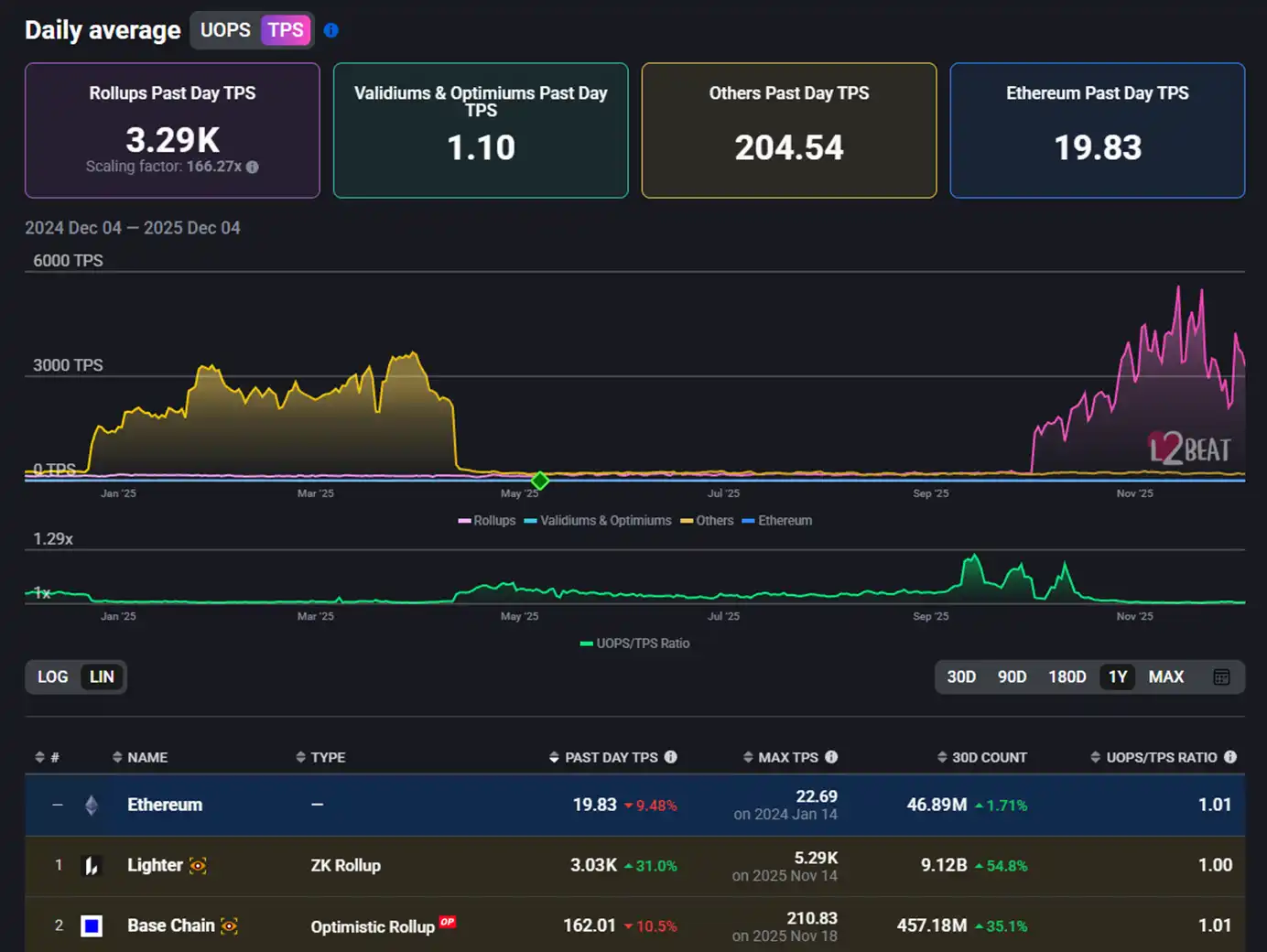
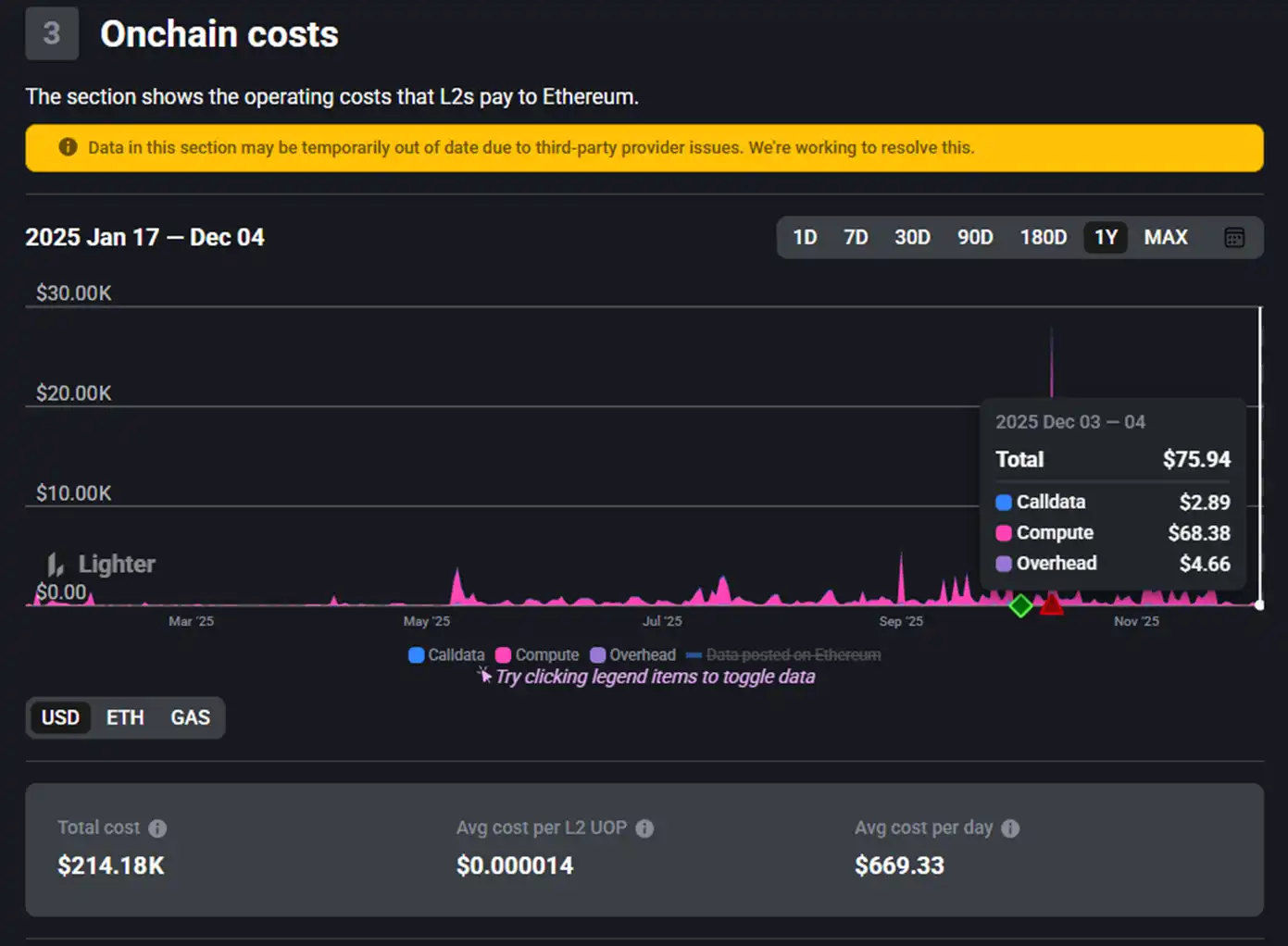
Therefore, it can be said that there was a "misalignment of incentives" regarding blob Gas fees between the mainnet and L2. L2s wanted blobs to be as small as possible to reduce user gas fees, while the mainnet wanted blob Gas fees to be as high as possible because it was providing security for L2s.
The EIP-7918 proposal of the Fusaka upgrade linked blob Gas fees to the mainnet's gas fees, providing a floor for blob Gas fees and making them more stable and predictable. Bitwise analysts state that after the Fusaka upgrade, the minimum threshold for blob Gas fees is roughly the mainnet's base execution fee divided by 16, which will create a more stable income and burn flow for the mainnet.
Of course, the actual impact on mainnet revenue and burn growth will depend on how each L2 grows.
You may also like

Morning Report | OpenAI has submitted an S-1 registration statement draft to the U.S. SEC; Morpho completes $175 million financing

Galaxy Deep Research Report: How Hyperliquid's HIP-4 Upgrade Changes the Landscape of Prediction Markets?

Latest research from 13 top universities including Cornell University: The current state, challenges, and misconceptions of the fusion of Crypto and AI

Deconstructing Anthropic: The Best AI Company, Possibly Also a Type of Organizational Invention

Every exchange is a "Universal Exchange."

The counterattack of traditional finance: Alliance chains are quietly reviving
Pantera Capital Partner: How Tokenization is Restructuring the Private Equity and Early Investment Ecosystem?

Mastercard Launches Agent Pay for AI, Plans to Record AI Agent Payment Authorizations on Polygon
Mastercard launched Agent Pay for AI, a new payment protocol designed to help AI agents make small payments such as pay-per-use access to data and APIs. The system plans to record human-granted AI agent permissions on Polygon, focusing on verifiable authorization, identity, and payment controls.

Curve Deploys Llamalend v2 on Optimism With 250,000 OP Incentives
Curve launched Llamalend v2 on Optimism with 250,000 OP incentives from the Optimism Foundation. The upgrade expands Llamalend beyond its earlier crvUSD-focused model, adding broader collateral support, LlamaRisk market reviews, and the ability to use Curve LP tokens as collateral.

Raydium Old Liquidity Pool Reportedly Exploited, With $1.34 Million Moved to Ethereum and Tornado Cash
An old Raydium liquidity pool was reportedly exploited for around $1.34 million in USDC, RAY, and wSOL, with the stolen funds bridged to Ethereum and deposited into Tornado Cash. The incident highlights the tail risks of legacy DeFi pools, old contracts, and cross-chain fund laundering paths.
Kalshi Executive Challenges “SBF Backed AI Unicorns” Narrative, Says Leopold Aschenbrenner Was Key Figure
Kalshi executive John Wang questioned the “SBF backed AI unicorns” narrative, saying Leopold Aschenbrenner was the key figure behind major AI investment decisions.

New York Proposes Stricter Stablecoin Issuer Rules Aligned With Federal GENIUS Act
NYDFS proposed stricter stablecoin issuer rules aligned with the GENIUS Act, covering reserves, custody, redemption timelines, audits, and capital buffers.

CryptoQuant Says Bitcoin Profitable Supply Is Near 45% Pressure Zone as On-Chain Data Points to Market Repricing
CryptoQuant said Bitcoin’s profitable supply is nearing the 45% pressure zone, signaling rising market stress, unrealized losses, and a possible on-chain repricing phase.

Bitcoin Falls Below 200-Week Moving Average as On-Chain Data Shows Over Half of Supply in Loss
Bitcoin dropped below its 200-week moving average as on-chain data showed over 50% of circulating supply is now in loss, signaling rising market stress.

CFTC Reportedly Plans New Prediction Market Rules Focused on Manipulation Risk and Public Interest Review
The CFTC is reportedly preparing new prediction market rules focused on manipulation risk, public interest review, and retail trader protections.

Meet the new WEEX trial fund—your gateway to greater profits

WEEX Labs Lands at Dutch Blockchain Week: A Disruptive Crypto × AI Conversation Sets Sail in Amsterdam
SK Hynix Reportedly Plans U.S. ADR Listing as Early as August, With SEC Approval Possible in Late June
SK Hynix may pursue a U.S. ADR listing as early as August, with SEC approval reportedly possible in late June amid strong AI chip supply chain demand.
Morning Report | OpenAI has submitted an S-1 registration statement draft to the U.S. SEC; Morpho completes $175 million financing
Galaxy Deep Research Report: How Hyperliquid's HIP-4 Upgrade Changes the Landscape of Prediction Markets?
Latest research from 13 top universities including Cornell University: The current state, challenges, and misconceptions of the fusion of Crypto and AI
Deconstructing Anthropic: The Best AI Company, Possibly Also a Type of Organizational Invention
Every exchange is a "Universal Exchange."
The counterattack of traditional finance: Alliance chains are quietly reviving


