
Not Just Guessing Right or Wrong, Market Prediction Is Getting More and More “Fun”





Original Article Title: "As Someone Who Plays Prediction Markets Every Day, I Have Seen These Innovations and Changes"
Original Article Author: Asher, Odaily Planet Daily
“Polymarket has such great liquidity, besides farming points for token airdrops, why would anyone still use other prediction market platforms?” This is a question I have been pondering constantly as I recently experienced multiple prediction markets.
Indeed, during the token issuance phase of Polymarket's parent company Blockratize, a trademark application for "POLY" was submitted, coupled with previous statements by Polymarket executives indicating plans to launch a native token and conduct an airdrop, leading the market to generally expect that farming Polymarket may be the next "big thing." However, unlike other emerging prediction markets, Polymarket has not yet launched a clear points or task incentive system. Users find it difficult to dynamically adjust their "farming" strategy based on points incentive feedback, to some extent still in a challenging mode of "blind farming".
In contrast, most of these emerging prediction market platforms have introduced a points mechanism, allowing users to have a clearer "airdrop strategy path" while participating in platform trades. Although these prediction market platforms are mostly still in the early stages, with certain bugs and occasional community complaints, in the actual experience process, some differentiation highlights "distinct from Polymarket" can indeed be found.
Below, I will introduce several highlights summarized from experiencing different prediction market platforms recently.
Highlight One: Idle Funds Will No Longer Be "Flat," Predictive Positions Can Continue to Generate Revenue
In traditional prediction markets (such as Polymarket, Kalshi), after users buy YES/NO positions, the funds are usually locked until event settlement. During this time, these funds cannot participate in other strategies and do not generate any income, essentially representing a "idle fund" with significant opportunity cost.
predict.fun is attempting to change this. The platform will access the BNB Chain's low-risk interest rate strategy for the collateral funds users use for predictions, allowing positions to automatically generate stablecoin revenue during the holding period. According to an official announcement on January 8, 2026, predict.fun has partnered with the Venus Protocol, and the USDT collateral assets locked by users will be automatically deposited into Venus's money market for interest, thereby continuously generating additional revenue while waiting for the event results.
In other words, users' funds are still actively "working" on the chain during the holding period, with the typical stablecoin annualized yield ranging around 3%–5% (specifically depending on the underlying DeFi strategy and market conditions). More importantly, this portion of yield is independent of the prediction outcome—whether the ultimate prediction is successful or not, the yield generated during the holding period can be claimed separately, essentially adding an extra layer of passive income beyond predicting gains or losses.
From a product mechanism perspective, this design effectively transforms the "idle funds" in traditional prediction markets into "active funds," which is one of the most distinctive features of predict.fun. The platform has now enabled the feature to claim holding rewards, allowing users to collect accumulated holding rewards at a fixed time every Tuesday, providing a clearer compound yield logic for long-term holding at the strategy level.
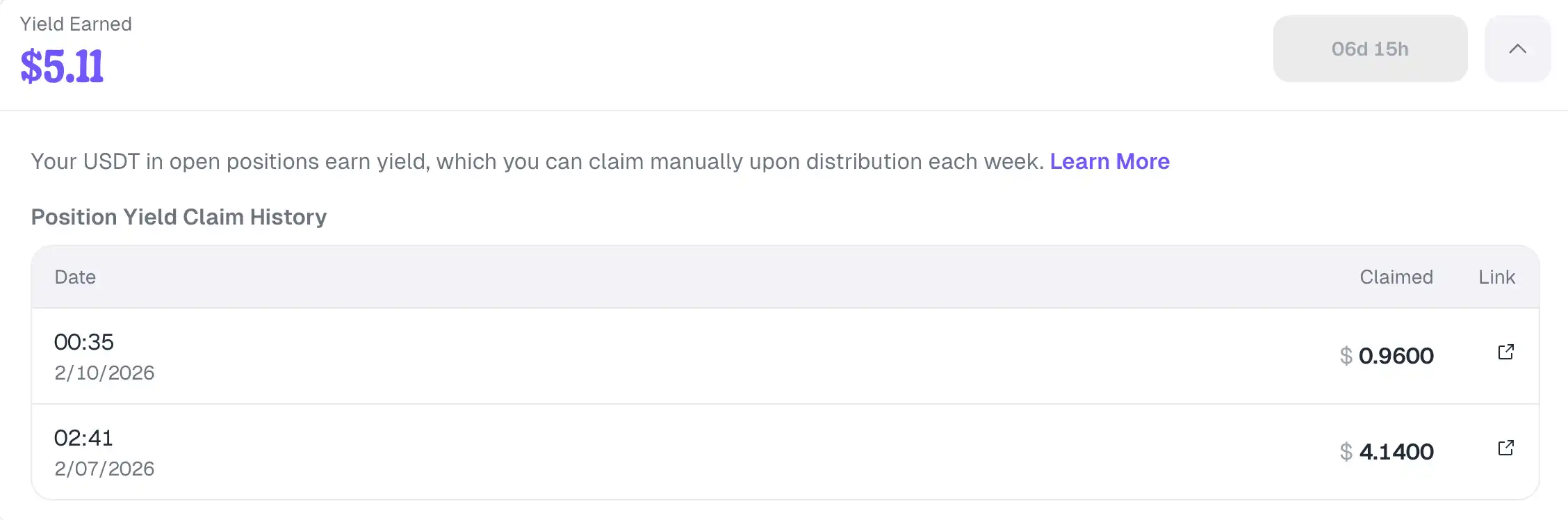
predict.fun Holding Reward Claiming Diagram
Highlight 2: Short Video-Style Swipe Experience, Bringing the Prediction Market Closer to "Content Consumption Products"
Different from the traditional transaction terminal-oriented interface of prediction markets, some emerging prediction market platforms have notably leaned towards content platforms in interactive design, seeking to lower the entry barrier and increase user engagement time. For example, in the mobile interface of predict.fun, each screen corresponds to a prediction event, allowing users to quickly browse through different markets by swiping up and down. The overall experience is more akin to the information feed pattern of short video platforms. This design enables users to naturally discover interesting prediction targets through continuous "market browsing" without actively searching for events, significantly enhancing browsing efficiency and participation frequency.
Similarly, Probable adopts a left-to-right swipe interaction, making the prediction behavior more closely resemble the information matching logic of social product experiences. From a product perspective, the core of such designs is not just about optimizing the UI but rather attempting to transform the prediction market from a "low-frequency trading tool" to a "high-frequency content consumption gateway."
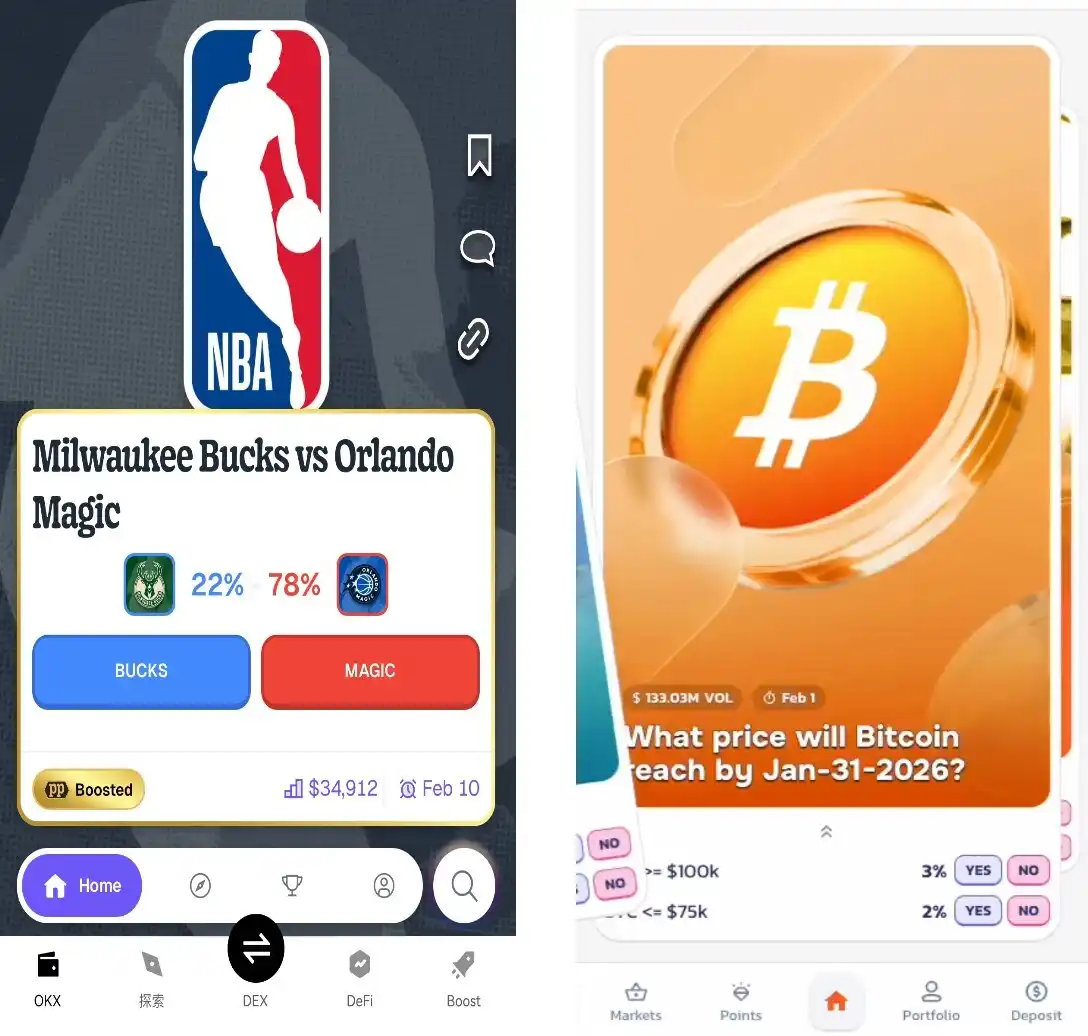
Illustrative Diagram of the Mobile Interaction Styles of Two Prediction Market Platforms (Left: predict.fun; Right: Probable)
The founder of predict.fun, Dingaling, has also mentioned in a Space that he hopes to build the prediction market into a scenario similar to a short video app—where users can place bets while browsing daily hot events and interesting topics, enhancing community engagement and user stickiness further through features like comments and interactions.
From the experiential perspective, this kind of information flow-based interaction is itself a highly attractive product innovation. Compared to the traditional way of actively seeking out the market, scrolling browsing allows users to continuously "market surf" in fragmented time, naturally engaging in participation while browsing content, making the user experience of prediction markets more lightweight and seamless.
Highlight Three: The "Exclusive Event Market" around Community Hot Topics, Enhancing Localization Engagement
In addition to product mechanics and interaction experience, some emerging prediction market platforms have also begun to explore a differentiated route in market content design. They no longer simply replicate the generic events on Polymarket or Kalshi but instead focus on topics with high internal community interest within the crypto community, introducing more niche "exclusive event markets." For example, events on predict.fun related to Binance and community hot topics, including "Bitcoin balance changes in the March 1st Binance SAFU Fund Wallet" and "The number of CZ tweets from February 7th to 14th, 2026," belong to the type of topics that are closer to daily discussions among crypto users.
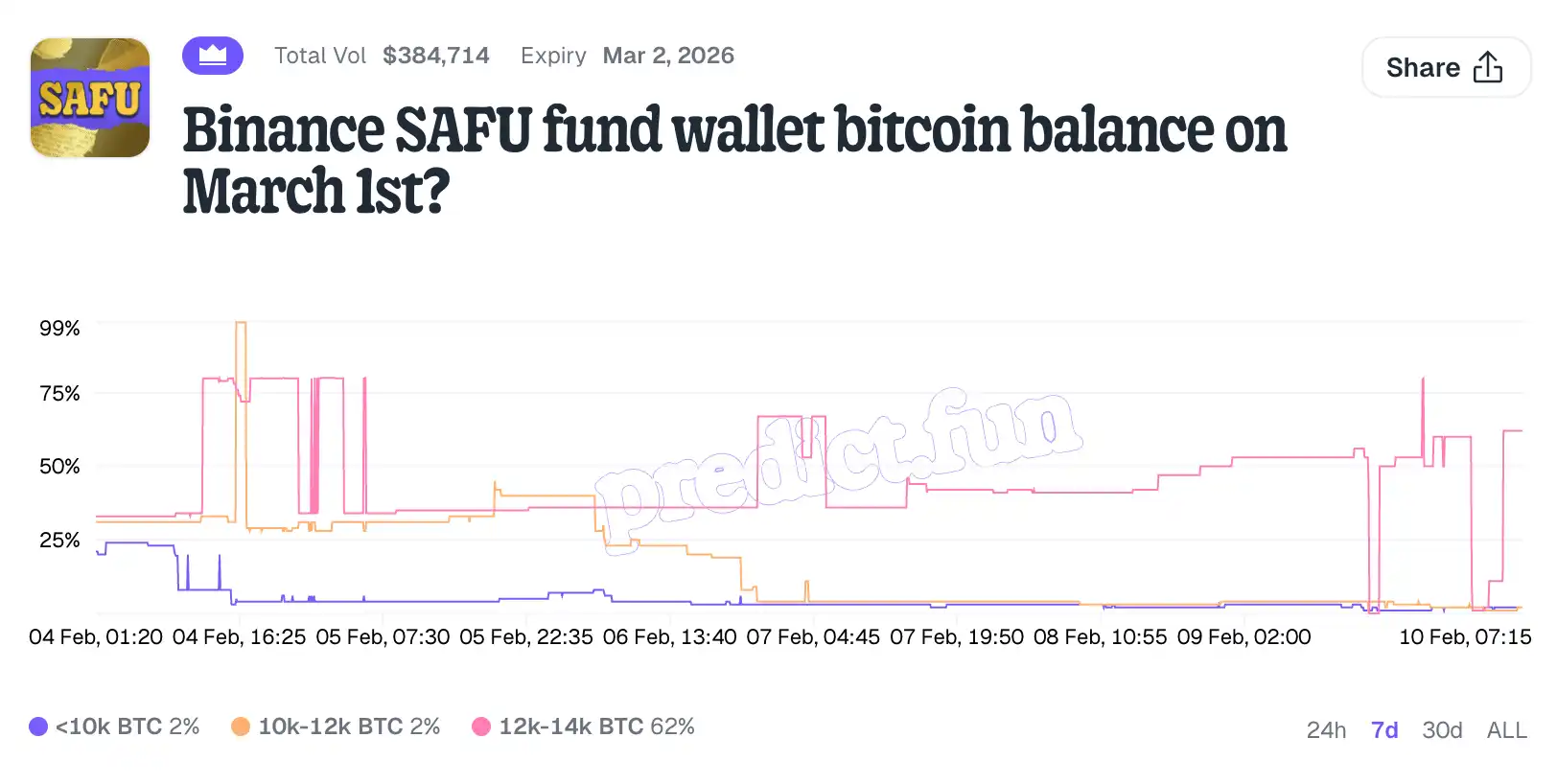
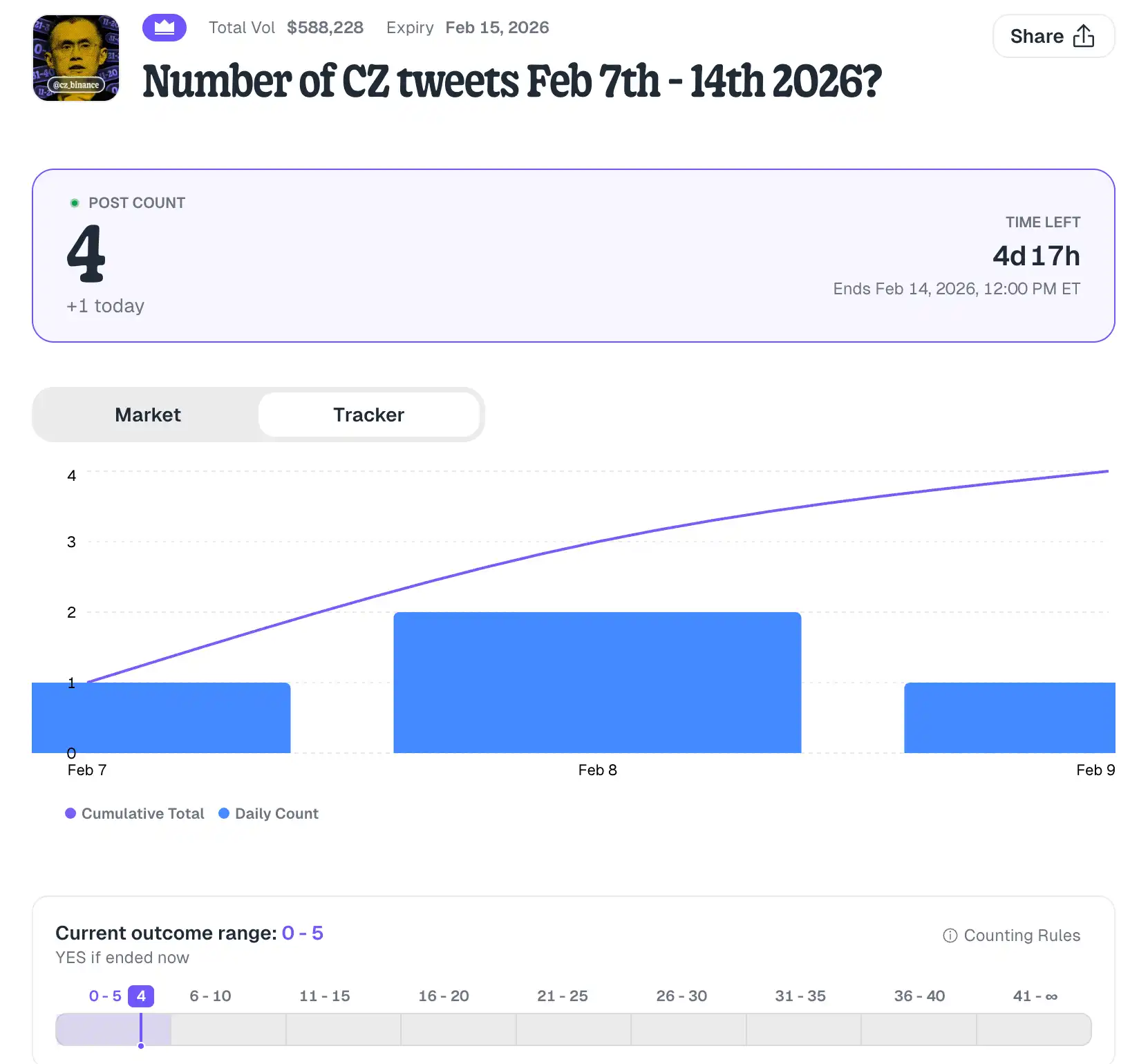
predict.fun Launches Exclusive Prediction Events
Compared to traditional macro events or general political and sports markets, these prediction events with obvious community attributes are more likely to stimulate user discussions and dissemination, and are also more likely to generate participation heat within specific user groups. From the perspective of platform operation, the continuous introduction of exclusive events is essentially building a platform-specific content supply, making the prediction market not just a "trading venue" but gradually becoming a gathering place for community hot emotions and narratives.
From the above events, it can be seen that predict.fun is consciously differentiating itself at the "event supply" level, rather than simply replicating markets already available on Polymarket or Kalshi. Designing prediction events around CZ, the Binance ecosystem, and community hot topics makes the platform more likely to foster dissemination and participation within specific user groups. This content strategy is also becoming an important operational direction for some emerging prediction markets.
It is worth noting that among the currently active emerging prediction markets, a considerable number of projects come from the BNB Chain ecosystem, and their user base is noticeably more inclined towards the Asian community. In this context, community culture, subculture, and even more "stan culture"-like participation behavior are gradually becoming important factors influencing the design and dissemination of prediction market events. In this context, for emerging prediction market platforms, the Asian community culture formed around differentiated event design and the more "stan culture"-like participation behavior are becoming directions worthy of in-depth study, and the related impacts will be further discussed in subsequent articles.
You may also like

Morning Report | CoinEx becomes a key hub for Iran to evade sanctions, involving over $3.8 billion in funds; Kalshi seeks a new round of financing, with a valuation potentially rising to $40 billion

Why do cryptocurrency projects always like to change their names?

From the white-haired stock god to the billionaire fund mogul, the smart people shorting Nvidia are all getting rich using the same framework

Morning News | The draft amendment to the People's Bank of China Law aims to clarify the legal status of digital renminbi; South Korea will transfer about 40 unregistered virtual asset service providers to law enforcement agencies

The cryptocurrency industry has entered the "Show Me" era: merely relying on vision is no longer enough
Interpreting the Ethereum Foundation's new structure: Reaffirming self-sovereignty amid institutional trends
Former SpaceX engineer reconstructs the financial execution system using first principles

Tidal Investment: We still have a positive outlook on the AI industry chain, but the reasons have changed

Standard Chartered Bank sings a 50x rhapsody again, aiming for AAVE to reach 3500 USD

The interim executive director of the Ethereum Foundation speaks out: What is our mission?
Why does OKX want to start a new company with the parent company of the New York Stock Exchange?

Why Is PAXG Price Different From Gold? 5 Reasons Crypto Traders Should Know

WEEX OpenAPI 101: 5 Powerful Modules, AI Trading Tools, and Grab Up to 70% Revenue Opportunities
Learn how WEEX OpenAPI connects traders, developers, AI agents, and trading platforms. Discover WEEX API features, Binance-compatible integration, automated trading workflows, revenue opportunities, and ecosystem possibilities.

Interview with NDV Founder Jason Huang: Popping the AI Bubble and the Myth of Microstrategy, Seeking the Ultimate Ace in the Crypto Market

Morning Report | Former Ethereum Foundation researcher establishes Ethlabs; EU Parliament Economic Committee passes digital euro regulatory proposal

Dragonfly partner Haseeb: The fastest-growing companies in the future may all be stuck at 149 people

How xBubble Breaks the Deadlock in VC's Heavy Investment in the OPC Economy

The encrypted unicorn Blockstream is deeply embroiled in a serious fraud case
Morning Report | CoinEx becomes a key hub for Iran to evade sanctions, involving over $3.8 billion in funds; Kalshi seeks a new round of financing, with a valuation potentially rising to $40 billion
Why do cryptocurrency projects always like to change their names?
From the white-haired stock god to the billionaire fund mogul, the smart people shorting Nvidia are all getting rich using the same framework
Morning News | The draft amendment to the People's Bank of China Law aims to clarify the legal status of digital renminbi; South Korea will transfer about 40 unregistered virtual asset service providers to law enforcement agencies
The cryptocurrency industry has entered the "Show Me" era: merely relying on vision is no longer enough
Interpreting the Ethereum Foundation's new structure: Reaffirming self-sovereignty amid institutional trends


