
On-chain Data Academy (Part 5): How Many People Are Actually Making Money? A Five-Minute Overview of the Objective Sentiment Indicator PSIP


Original Article Title: "On-Chain Data Classroom (Part 5): How Many People Are Actually Making Money? A Five-Minute Guide to the Objective Sentiment Indicator PSIP!"
Original Article Author: Mr. Berg, On-Chain Data Analyst
This article is the 5th part of the On-Chain Data Classroom series, with a total of 10 parts. It will take you step by step through understanding on-chain data analysis. Interested readers are welcome to follow this series.
Related Reading: "On-Chain Data Classroom (Part 4): Visualized BTC Chip Price Distribution Chart"
TL;DR
- This article will introduce the on-chain indicator PSIP
- PSIP = Percentage of Supply in Profit, among circulating $BTC
- It can serve as a guide to market sentiment, with applications in recognizing market tops and bottoms
What is PSIP?
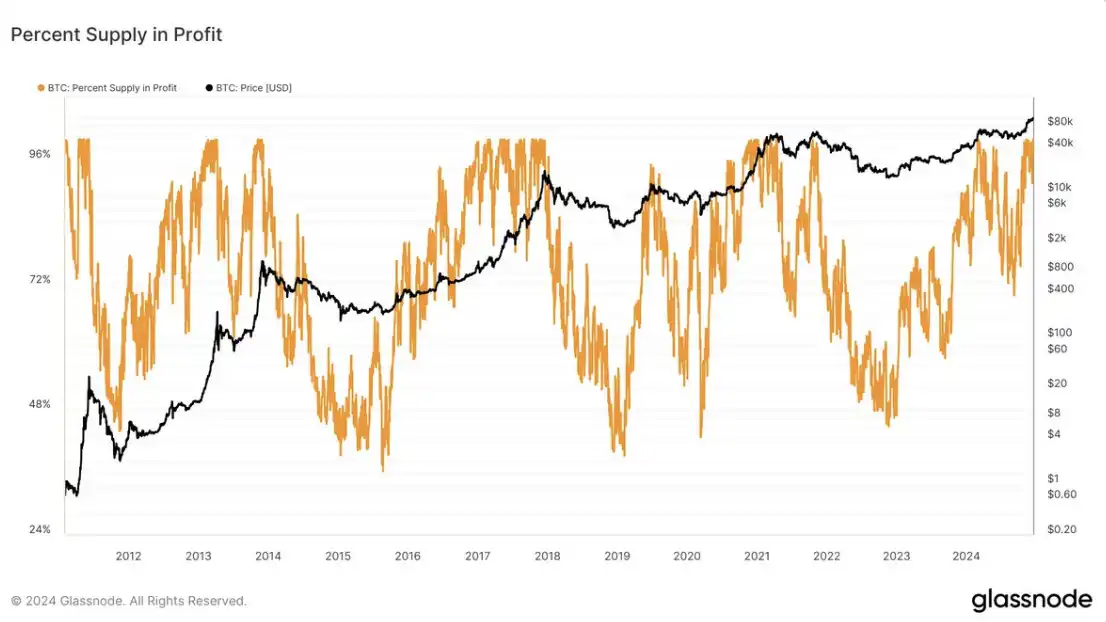
PSIP, short for Percent Supply in Profit, is defined as "the percentage of circulating $BTC that is in a state of profit."
Calculation method:
It distinguishes profit and loss chips by "comparing each $BTC's last transfer price with the current price."
When the current price is higher than a certain $BTC's last transfer price, this $BTC is considered a profit chip.
What if Most Chips Are in a Loss...?
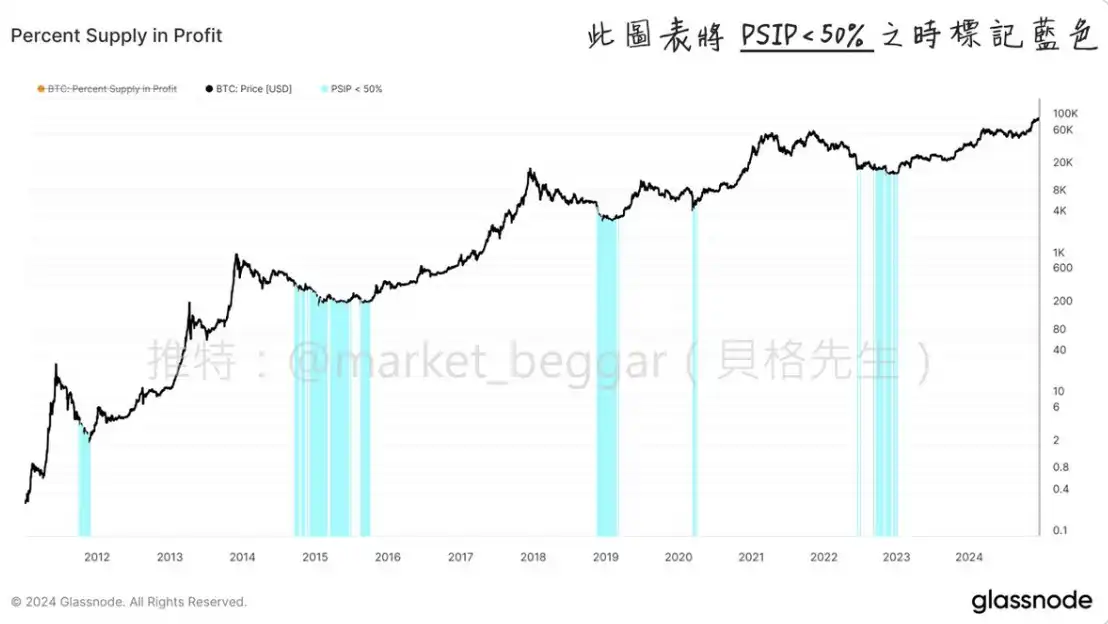
An important application scenario of PSIP is market bottoms. When most chips are in a loss, it is usually a good time to buy the dip.
The logic is straightforward:
Under similar conditions, the more profitable holders, the greater the selling pressure from profit-taking in the market, and vice versa.
As shown in the chart below, historical points where $BTC had PSIP <50% are marked, indicating very precise opportunities to buy the dip
What if the Majority of Chips are in Profit?
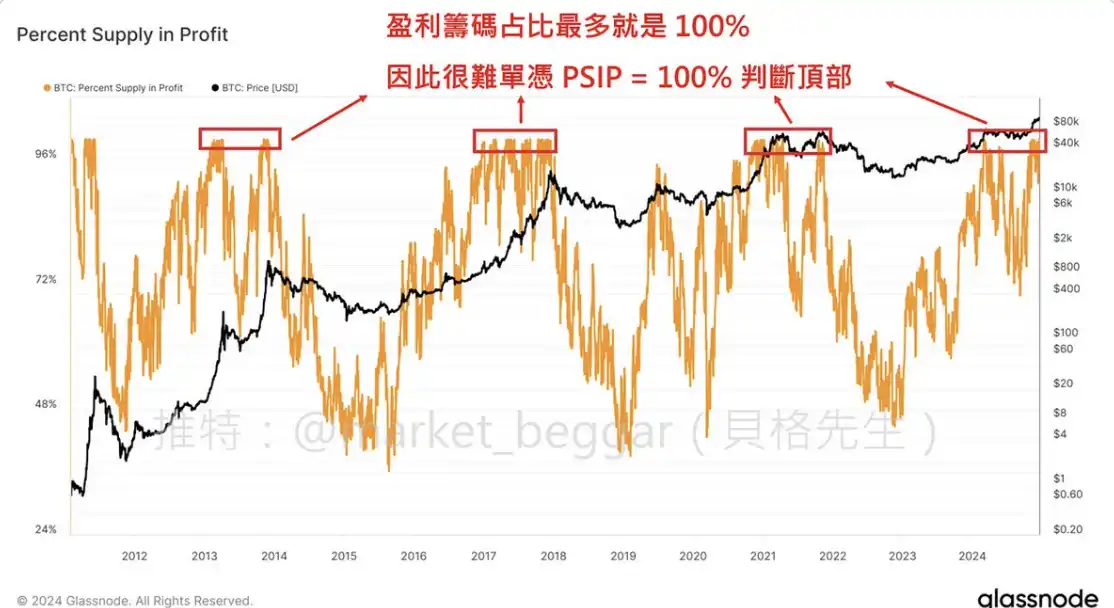
As shown in the chart below, the percentage of chips in profit reaches a maximum value of 100%. Therefore, it is difficult to determine a top based solely on high PSIP.
Here is an interesting logic to share: “Observe the Correlation Change between PSIP and Price”
This idea is derived from the following analysis: The Market Pulse – Week 36, 2022
Conclusion
The above is all the content of On-Chain Data School (Part Five). For readers interested in further studying on-chain data analysis, remember to keep track of this series of articles!
If you want to see more analysis and teaching content on on-chain data, feel free to follow my Twitter account (X)!
I hope this article has been helpful to you. Thank you for reading.
You may also like

How Could the SpaceX IPO Affect Bitcoin, Altcoins season, and Crypto Liquidity?

RootData: May 2026 Cryptocurrency Exchange Transparency Research Report

Should we escape the peak? The principle of the tail-end market in the stock market

Morning News | Five major virtual asset platforms in South Korea have experienced 57 incidents of hacking and system failures in six years; Grayscale submits registration application for Canton ETF

The ambitions of Kalshi, MTS, and a16z

The AI bubble is bursting

Real withdrawal is to release water: When crypto VCs position themselves in the Agent network effect

Has the narrative of BTC as "digital gold" failed?

A Perspective on the Indian Cryptocurrency Market: Descending into Silence or Moving Towards Maturity?

It took me a year to see the painful truth about Agent payments

Morning News | Bitmine issues preferred shares to raise $300 million; Polymarket accuses Kalshi of industrial espionage

Privacy coin trust crisis! ZEC plummets over 56% in a single day
Who is leading the price discovery in the cryptocurrency market? Measured delays on platforms like Binance and Hyperliquid

Anthropic launches IPO: Business miracle or valuation bubble?

What Is SpaceX IPO and Why Is Everyone Talking About It?

Macroeconomic Analysis of the African Payment Market Landscape
Morning Report | Coinbase Ventures makes its first investment in ENA; SpaceX plans to set the IPO price at $135 per share
Full text and analysis of the speech by the CEO of SanDisk at the 42nd Annual Strategic Decision Conference of Bernstein
How Could the SpaceX IPO Affect Bitcoin, Altcoins season, and Crypto Liquidity?
RootData: May 2026 Cryptocurrency Exchange Transparency Research Report
Should we escape the peak? The principle of the tail-end market in the stock market
Morning News | Five major virtual asset platforms in South Korea have experienced 57 incidents of hacking and system failures in six years; Grayscale submits registration application for Canton ETF
The ambitions of Kalshi, MTS, and a16z
The AI bubble is bursting


